R02 / Device study

Can we build a safer vape?

We’re designing a reusable vape for adults who already use nicotine. Our goal is to reduce the contaminants they inhale. We’ll start by testing whether a filter reduces the metals that reach the mouthpiece.

Interactive 3D studyParts catalogue

Explore the components ↗

Exposure research

What’s in
a puff?

Heating vape liquid creates an aerosol of tiny droplets and gases. Heat can produce new substances, and metals can enter the aerosol from device parts.

Formaldehyde, for example, can form when common carrier liquids break down at high temperatures. Assessing exposure means measuring how much reaches the mouthpiece over repeated draws. This prototype still needs a final liquid formula and measured emissions.

Health Canada on vaping risks ↗
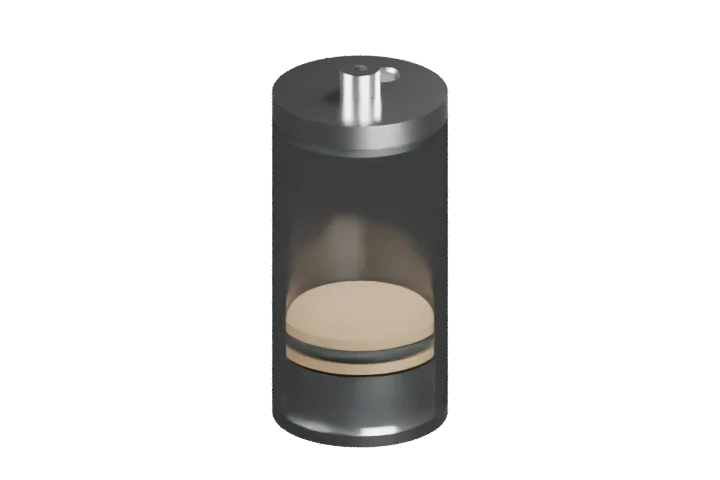
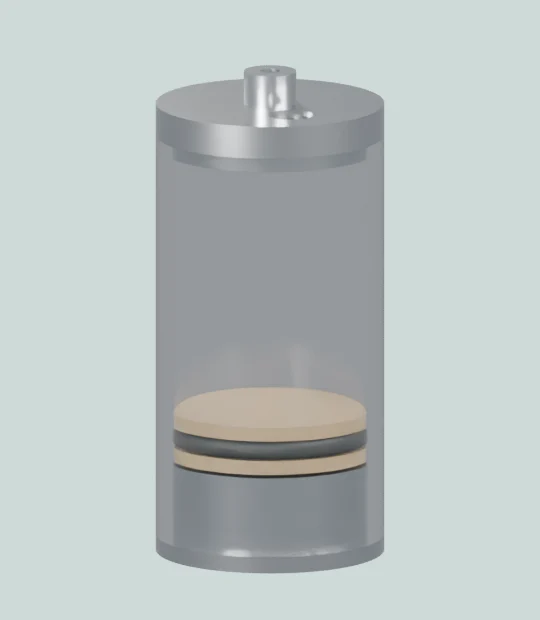
A modeled reservoir with a moving piston and elastomer seals
StorageReservoir · follower and seals

Limit air entering the reservoir.

A moving follower takes up the space left by the liquid. Comparing oxygen ingress and nicotine degradation against a vented reservoir will show whether the seal makes a difference after repeated refills.

Inspect the reservoir ↗
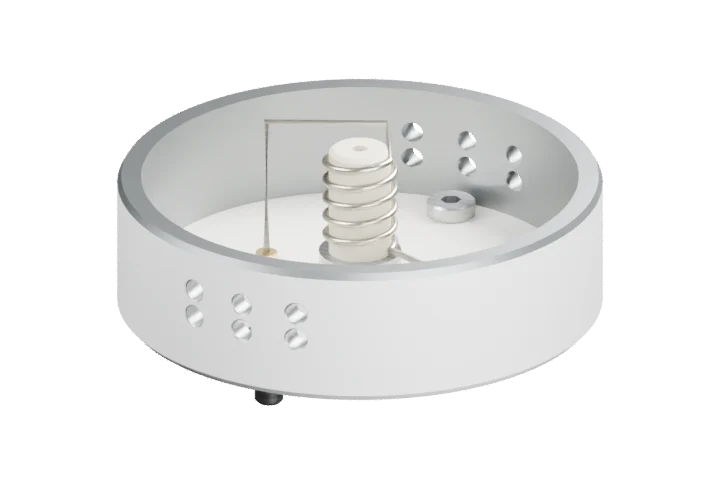
Heating head assembly
HeatAssembled head · inlet collar

Find when the heater runs dry.

Liquid supply and heater temperature can change the chemicals produced during a draw. The proposed test pairs temperature readings with carbonyl measurements as the reservoir empties.

Heater emissions study ↗
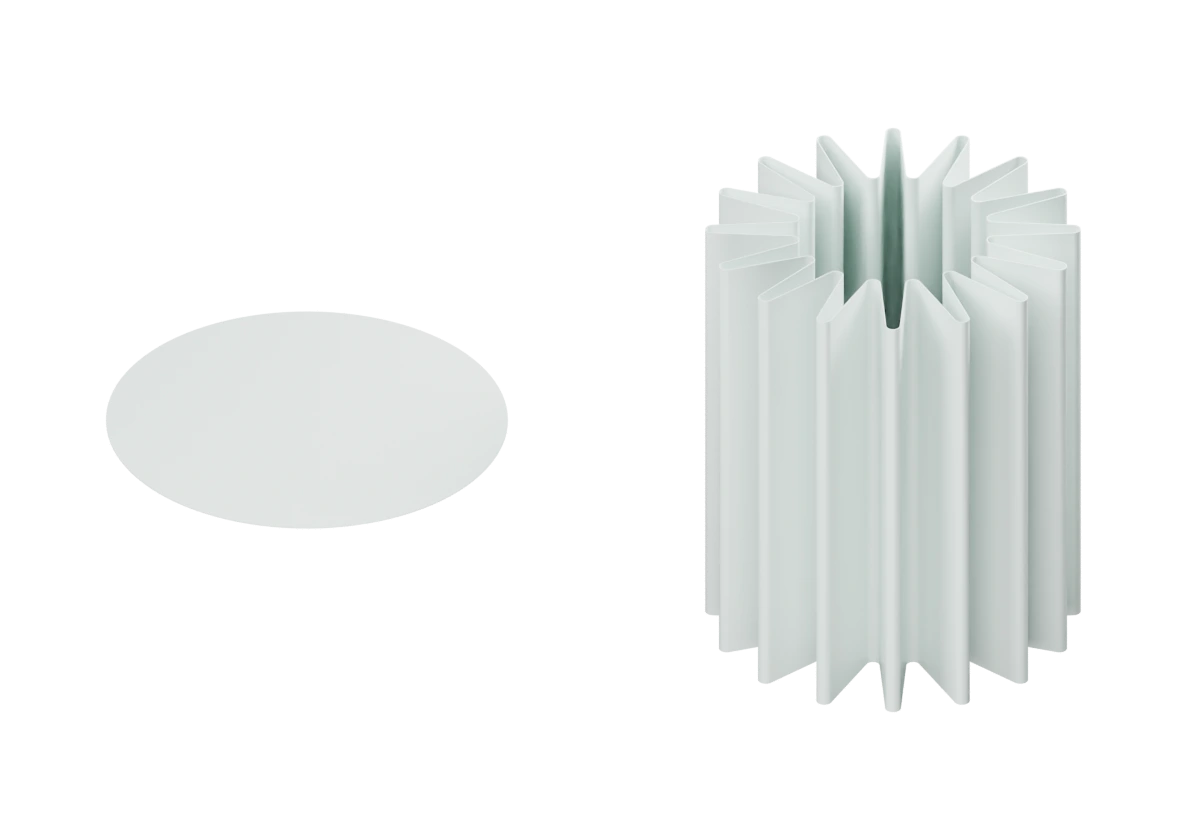
Flat disc and pleated film shown at the same scale
MaterialsMouthpiece · two filter geometries

Trace what reaches the mouthpiece.

Compare the same liquid before filling, after storage and in the collected aerosol. The flat and pleated inserts use the same film. Does either reduce the metal reaching the outlet while preserving the draw and nicotine delivery?

Compare the two inserts ↗
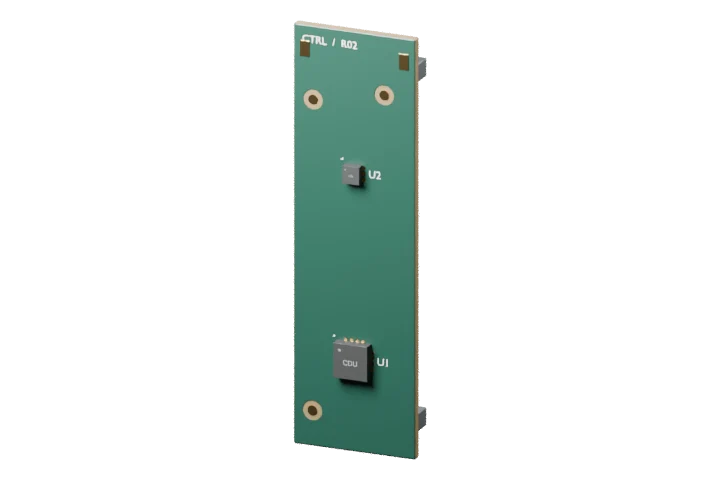
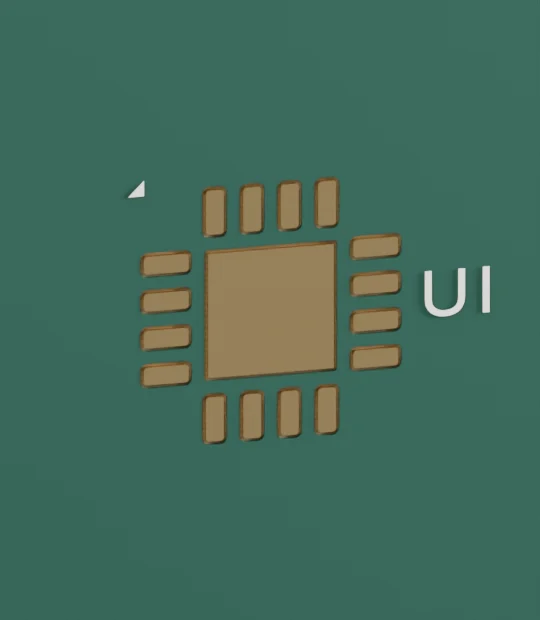
Battery charging and protection chip placement on the candidate board
Electrical protectionPower board · component placement

Design for a fault during charging.

The board has room for a charger and a separate cell-protection chip. A working circuit, a compatible cell and fault tests are still needed to establish whether charging stops under unsafe conditions.

Inspect the control board ↗
Testing & evidence

What would count as progress?

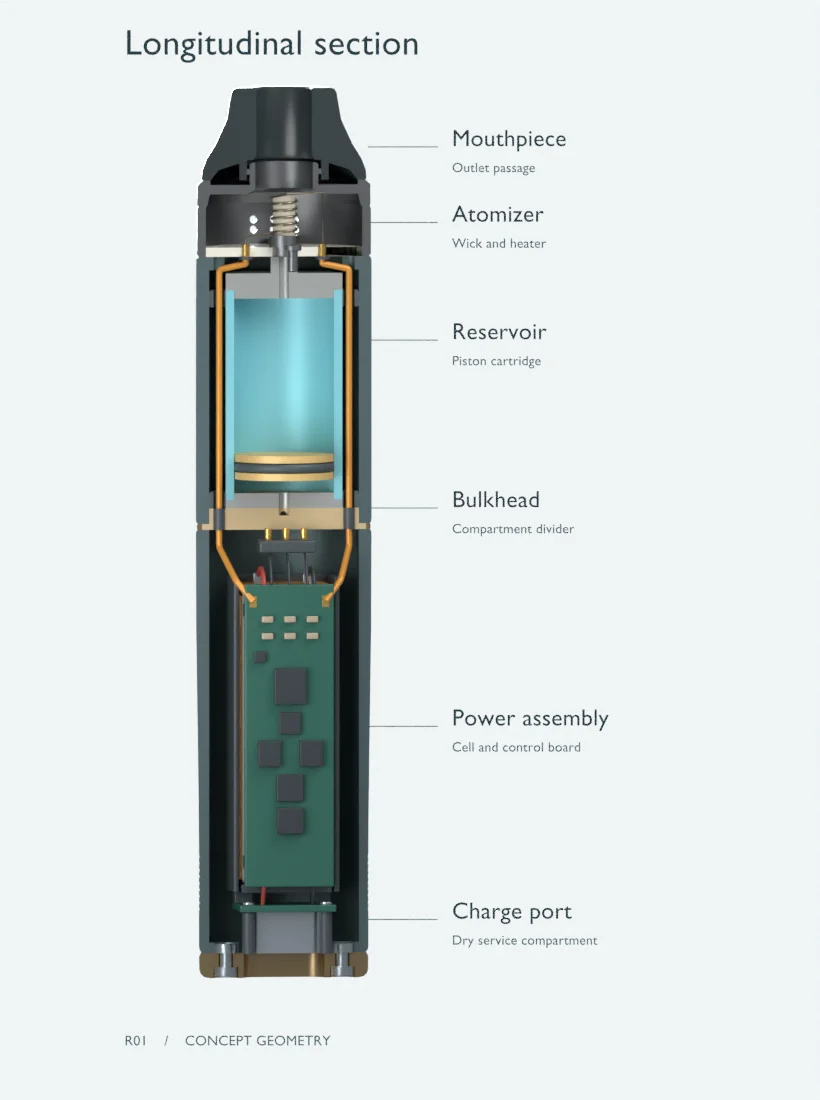
Annotated section of the earlier cylindrical device, showing the reservoir and power bay
R01 archive · Longitudinal section. The piston reservoir lies between the heating head and the lower power bay. R02 uses a flat-front housing with a touch display.

Measure the output

Collect gases and droplets from fresh and aged units. Check nicotine, metals, chemicals formed by heating and material transferred from seals or coatings. Compare repeated draws, low fill and worn components.

Measure the experience

Instrumented draw tests can establish airflow and temperature. Comparing sensation in adults requires ethical review. Measuring nicotine at the mouthpiece cannot establish how quickly someone feels its effects.

Define the claim

The project aims to reduce avoidable exposures. Whether this design achieves that requires comparative testing. Nicotine is addictive and can temporarily raise heart rate and blood pressure. Lower emissions of a measured substance alone cannot establish long-term safety.

Engineering record

Behind the geometry.

Read the design decisions ↗
Cross-section of the moving reservoir follower

Reservoir travel

With a 12 mm bore and 16.25 mm maximum piston stroke, the reservoir displaces 1.838 mL in CAD. The refill plunger can displace 6.338 mL from its illustrated position. Preventing overfill is an open design problem. Delivered volume and seal friction still need bench measurements.

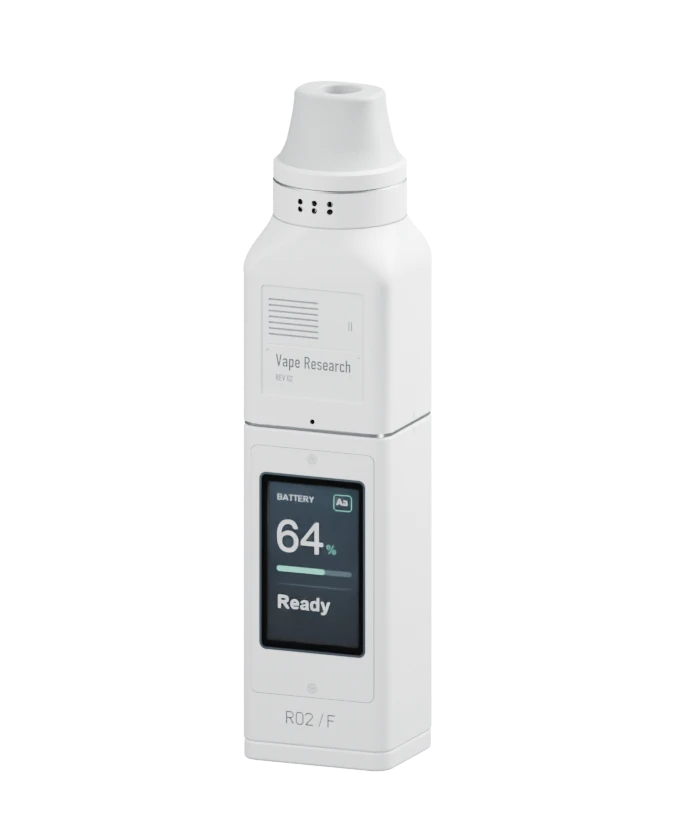
The satin-white housing and its flat display window

Why a white shell?

The flat front holds the status screen. Inside, the piston still travels in a round bore. Satin white is a candidate for reducing heat absorbed in sunlight. Surface reflectance and internal temperatures still need measurement.

Finish and thermal test plan ↗ · Inspect the sleeve detail ↗
Footprints of the proposed protection electronics

Traceable electronics

The charger and protector packages follow Texas Instruments drawings, down to their underside terminals. The board remains a placement study. Cell selection, charging connector, switching, board routing and thermal validation are open.

Charger data ↗ · Protector data ↗
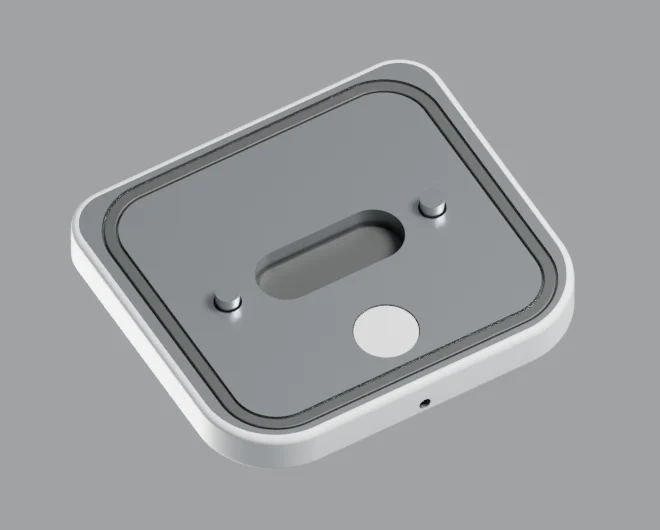
Recessed underside of the dry power bay

When a cold device meets humid air

Water can condense inside before the grip feels warm. The design calls for heating and charging to stay inhibited while moisture or cell temperature is uncertain.

Environmental protection and testing ↗
Published research

What the studies show.

Evidence from other devices and laboratory studies guides the questions we ask about R02.

Metals study · sampling points
  1. Dispenser
    liquid
  2. Tank
    liquid
  3. Inhaled
    aerosol
Smoking cessation

The comparison matters

A 2026 Cochrane review found higher quit rates with regulated nicotine e-cigarettes than with nicotine replacement therapy among people trying to stop smoking. The trials studied smoking cessation. Long-term health effects of our proposed device remain unknown.

Cochrane review summary ↗
Cooling chemistry

The ice component

Researchers observed changes to the internal structure and function of laboratory airway tissue exposed to the synthetic coolant WS-23. This gives the team a specific hazard to investigate, while the human health risk at a given dose remains uncertain.

Wong and colleagues · 2023 ↗
Carbonyl emissions

Heat at the liquid interface

Experiments linked a shift in boiling behaviour at the heater surface with high carbonyl emissions under the tested conditions. Compare actual emissions when the reservoir is nearly empty, when the liquid feed is interrupted and during repeated draws.

Talih and colleagues · 2020 ↗
Metals

Trace the whole path

In samples from users’ devices, researchers found higher median concentrations of several metals, including nickel and chromium, in tank liquid and aerosol than in dispenser liquid. Pair refill, reservoir and mouthpiece measurements to investigate where material enters the system.

Olmedo and colleagues · 2018 ↗
Research library

The working documents.

Read the evidence, specifications and open engineering questions behind the model.

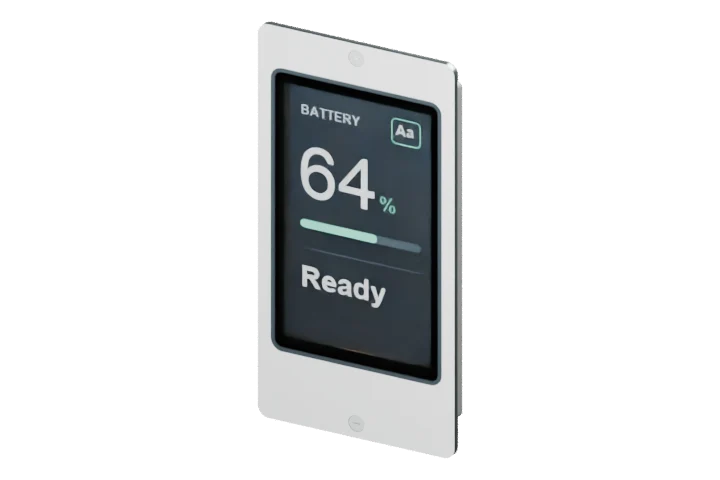
Front view of the display assembly
The carrier seats the LCD in the front opening. The touch sensor sits behind the protective window, with a seal around its edge. Separate flex cables connect the screen and the sensor to the electronics bay.