
Collapsible reservoir
A corrugated liner changes volume as liquid leaves. A vented guard admits air outside the liner and protects it from direct handling.
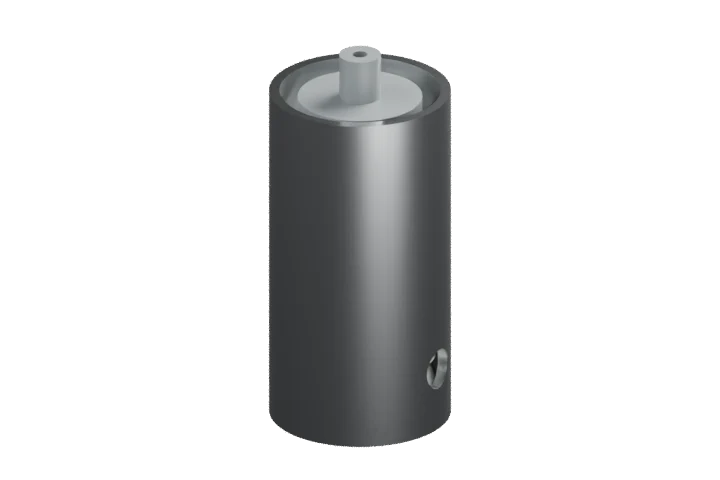
Collapsible reservoir
Assembled
Installed positions
Scroll to separate the parts, then follow each numbered marker.
Design science
The moving wall can take up the withdrawn volume without deliberately admitting air to the liquid compartment. Its stiffness affects withdrawal pressure. Oxygen can still enter through the liner, end joints or refill interface. Each repeated fold also places strain on the wall.
What needs testing
Record feed pressure and residual liquid as the liner empties at different orientations and temperatures. Cycle the folds and end joints, then measure leakage, oxygen ingress and material transfer into the stored liquid. Compare results against both rigid and follower vessels.
Inner parts and interfaces
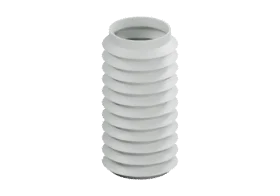 F30
Corrugated variable-volume liner
Changes volume as liquid leaves the collapsible reservoir candidate.
The folded liner can change volume as liquid leaves without a sliding piston seal. Its folds introduce separate questions about fatigue, trapped liquid and gas permeation.
Inspect part ↗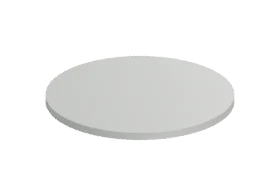 F31
Liner bottom disk
Closes the lower end of the collapsible liner candidate.
The bottom disk closes the movable liner at one end. Its perimeter is a distinct seam to examine for leakage as the liner flexes.
Inspect part ↗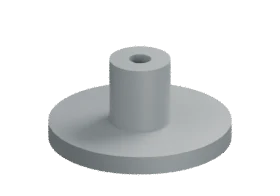 F32
Liner manifold and outlet
Connects the collapsible liner candidate to its outlet.
The manifold joins the flexible liner to a defined outlet so its discharge can be compared with the rigid and piston-fed alternatives.
Inspect part ↗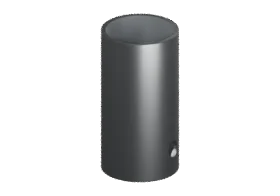 F33
Vented guard sleeve
Protects the flexible liner while allowing air into the surrounding space.
A rigid guard supports the liner from outside. Its vent allows air into the surrounding space as the flexible container changes volume.
Inspect part ↗